Focusing on simple and practical ways to live a happy, healthy and balanced life, once plant at a time!
Friday, June 15, 2012
What In The World Is...?
So what in the world is tempeh?
"Tempeh is made from cooked and slightly fermented soybeans and formed into a patty, similar to a very firm veggie burger. Many commercially prepared brands add other grains, such as barley, and also add spices and extra flavors. Although tempeh is made from soy, it has a unique taste and is mildly flavorful on it's own, unlike tofu. If you aren't fond of tofu, tempeh is also very high in protein and calcium, as well as beneficial isoflavones, but tastes nothing like tofu. Tempeh has a textured and nutty flavor." (source, about.com)
My recipe for Sloppy Joes is a great one. Now, I realize the pictures are unappealing, but trust me, they taste great.
I believe I got this recipe from the Kripalu cookbook.
Tempeh Barbecue
3 T canola oil (I use almost no oil because I use a cast oil pan, which rocks, right?)
8 ounces tempeh, cut into little pieces
1 1/2 tsp salt
1 tsp garlic powder
3/4 tsp black pepper
1 cup thinly sliced onions
1/2 cup sliced fresh mushrooms
1/2 cup canned tomato sauce
2 T canned tomato paste
2 T unsulphured molasses (black strap)
2 T fresh lemon juice
1 T red wine vinegar
1 T prepared brown mustard
1/2 tsp ground mustard (no big deal if you don't have it, but it's a nice flavor)
2 1/4 tsp tamari
In a medium-sized skillet, heat oil and grill the tempeh pieces on medium-high heat until brown on both sides, adding 1 tsp salt, the garlic powder and 1/4 tsp black pepper. Drain on paper towels and set aside.
In a large skillet, heat the remaining oil and saute the onions and mushrooms for 3-5 minutes, or until the onions are translucent.
Add the tomato sauce and paste, molasses, lemon juice, vinegar, prepared and ground mustard, tamari, remaining black pepper and salt and bring to a boil. Reduce heat to simmer. Add the reserved tempeh and cook for at lest 15 minutes. Serve immediately.
Friday, May 4, 2012
What is the world are GMOs?
"A genetically modified organism (GMO) or genetically engineered organism (GEO) is an organism whose genetic material has been altered using genetic engineering techniques. These techniques, generally known as recombinant DNA technology, use DNA molecules from different sources, which are combined into one molecule to create a new set of genes. This DNA is then transferred into an organism, giving it modified or novel genes. Transgenic organisms, a subset of GMOs, are organisms that have inserted DNA from a different species. GMOs are the constituents of genetically modified foods."
Whole Foods:
"A GMO is a plant, animal or microorganism whose genes have been altered using genetic modification by the inclusion of foreign genetic material or the alteration of some of its DNA. That foreign material may come from other individuals of the same or a different species, or it may be synthetic. And no lie, this makes GMO’s controversial. Some folks and companies think they’ll save the world from hunger by creating super plants resistant to disease; some folks and companies think that introducing foreign material may increase its toxicity. So you talked, and we listened. And our customers were clear about avoiding GMO’s in their food. In fact, in a poll we took in June of 2009, more than 80% of those we surveyed said they would seek out non-GMO products with clear labeling."
Pretty creepy stuff, right? What do YOU think?
Friday, April 27, 2012
What in the world is...Mestemacher Bread

I found it (by accident) at Whole Foods and it's going to become a regular purchase. It's particularly good toasted. I do an old trick my late grandmother used to do: toast 2 pieces and then rest them on the top of the toaster until they harden up, almost like a cracker.
I use the bread for making rustic sandwiches topped with chickpea spread, cukes and tomatoes.
Below is a little blurb about the company. Enjoy!
Source: http://www.mestemacher-gmbh.com/company/
"Mestemacher is a producer of bread and baked goods supplying the classic retail grocery trade in Germany and abroad with pre-packaged Vollkornbrot - German-style dark wholegrain bread - and international speciality breads. These products give Mestemacher a presence in a part of the whole bread and baked goods market. The range is aimed at potential consumers looking for speciality breads which are different from the conventional range of pre-packaged breads and baked goods. Mestemacher has been active in Germany for many years with numerous social projects promoting the equality of men and women in society and a work-life balance on the Scandinavian model."
Friday, April 13, 2012
What in the world is...Bok Choy?
I recently made this simple steamed bok choy dish (with steamed carrots and mushrooms) and it got me thinking about bok choy. Bok choy is a great example of the kind of vegetable I would have ignored in the grocery store before I went plant strong. I mean, when you really think about the full rainbow of vegetables out there that we haven't tried, it's really intimidating exciting!
In case you haven't tried bok choy at home (eating it in oily take-out Chinese doesn't count!), I recommend this sort of recipe. Just steam some vegetables and top them with a dressing of a simple peanut sauce and some toasted raw sesame seeds.
So what in the world is BOK CHOY anyway?
-
It is very low in calories and is a very rich source of many vital phyto-nutrients, vitamins, minerals and anti-oxidants.
-
Like other brasisca family vegetables, bok choy contains certain anti oxidant plant chemicals like thiocyanates, indole-3-carbinol, lutein, zeaxanthin, sulforaphane and isothiocyanates. Along with dietary fiber, vitamins these compounds help to protect against breast, colon and prostate cancers and help reduce LDL or "bad cholesterol" levels in the blood.
-
Fresh pak choi is an excellent source of water soluble antioxidant, vitamin-C (ascorbic acid). 100 g provides 45 mg or 75 % of daily requirements of vitamin C. Regular consumption of foods rich in vitamin C helps body develop resistance against infectious agents and scavenge harmful, pro-inflammatory free radicals.
-
It has more vitamin A, carotenes, and other flavonoid polyphenolic anti-oxidants than cabbage, cauliflower...etc. Just 100 g of fresh bok choy provides 4468 IU or 149% of daily required levels vitamin A.
-
Pak choi is very good source of vitamin K, provides about 38% of RDA levels. Vitamin-K has potential role in bone metabolism by promoting osteotrophic activity in bone cells. Therefore, enough vitamin K in the diet makes your bone stronger, healthier and delay osteoporosis. Further, vitamin-K also has established role in curing Alzheimer's disease patients by limiting neuronal damage in their brain.
-
Fresh bok choy has many vital B-complex vitamins such as pyridoxine (vitamin B6), riboflavin, pantothenic acid (vitamin B5), pyridoxine and thiamin (vitamin B-1). These vitamins are essential in the sense that our body requires them from external sources to replenish.
-
It also contains good amount of minerals like calcium, phosphorous, potassium, manganese, iron and magnesium. Potassium is an important component of cell and body fluids that helps controlling heart rate and blood pressure. Manganese is used by the body as a co-factor for the antioxidant enzyme superoxide dismutase. Iron is required for the red blood cell formation.
Friday, April 6, 2012
What in the world is...mirin

It is a kind of rice wine similar to sake, but with a lower alcohol content. I use it when making a nice peanut sauce (along with lime juice, garlic, ginger and peanut butter) to use over soba noodles. Hungry yet? :)
A low-alcohol, sweet, golden wine made from glutinous rice. Essential to the Japanese cook, mirin adds sweetness and flavor to a variety of dishes, sauces and glazes. It's available in all Japanese markets and the gourmet section of some supermarkets. Mirin is also referred to simply as rice wine .
Friday, March 30, 2012
What in the world is...phytonutrients
According to Wikipedia:
Phytonutrients are nutrients derived from plant material that have been shown to be necessary for sustaining human life. Phytochemicals are non-nutritive plant chemicals that contain protective, disease-preventing, compounds. Their role in plants is to protect plants from disease, injuries, insects, drought, excessive heat, ultraviolet rays, and poisons or pollutants in the air or soil. They form part of the plants immune system.
Although phytochemicals are not yet classified as nutrients, substances necessary for sustaining life, they have been identified as containing properties for aiding in disease prevention. Phytochemicals are associated with the prevention and/or treatment of at least four of the leading causes of death in Western countries - cancer, diabetes, cardiovascular disease, and hypertension. They are involved in many processes including ones that help prevent cell damage, prevent cancer cell replication, and decrease cholesterol levels.
So, the next time you're reaching for a snack, consider that the fruit or vegetable you're grabbing (right? :) is super healthy and healing.
Friday, March 23, 2012
What in the world is...Jicama

Today's "What in the world is" is called "Jicama" which is pronounced, "He-Ka-Ma" (you're welcome!)
It's a vegetable I didn't know existed until my cousins from Phoenix, AZ told me about it.
According to wisegeek.com:
Jicama is a crispy, sweet, edible root that resembles a turnip in physical appearance, although the plants are not related. Jicama has been cultivated in South America for centuries, and the vegetable is quite popular in Mexican cuisine. Jicama has a unique flavor that lends itself well to salads, salsas, and vegetable platters. The roots can sometimes grow to be quite large, although when they exceed the size of two fists, they begin to convert the sugars that give jicama its sweet flavor into starches, making the root somewhat woody to the taste.
Jicama is actually a legume, and it grows on vines that may reach 20 feet (six meters) in length. The vines tend to hug the ground, terminating in tubers that may grow up to 50 pounds (22 kilograms) in size, although the majority of jicama roots sent to market are approximately three to four pounds (1.3-2 kilograms) in weight. Before eating, the coarse brown outer layer of the jicama should be peeled to reveal the white inside.
When choosing jicama at the store, look for medium sized, firm tubers with dry roots. Do not purchase jicama that has wet or soft spots, which may indicate rot, and don't be drawn to overlarge examples of the tuber, because they may not be as flavorful. Jicama will keep under refrigeration for up to two weeks.
I like to add it to salads, especially something with beans and corn. Amazing that it's a legume! WHO KNEW? Judging by my excitement, I'm a total nerd :)Friday, March 16, 2012
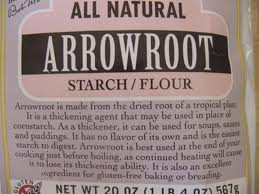
What in the world is...arrowroot?

A lot of the baking recipes I've stumbled across have arrowroot as one of the ingredients. I know it looks like flour, but what in the world IS arrowroot, anyway?
According to wikipedia,
Arrowroot can be used as a thickener for acidic foods, such as Asian sweet and sour sauce. It is invaluable in cooking when you wish to have a clear, thickened sauce, for example, a fruit sauce. It will not make the sauce go cloudy, as for example will cornstarch, flour or other starchy thickening agents.
The lack of gluten in arrowroot flour makes it useful as a replacement for wheat flour in baking. Like other pure starches, however, arrowroot is almost pure carbohydrate and devoid of protein, thus it does not equal wheat flour nutritionally.
Arrowroot thickens at a lower temperature than does flour or cornstarch, is not weakened by acidic ingredients, has a more neutral taste, and is not affected by freezing. It doesn't mix well with dairy, forming a slimy mixture.[3] It is recommended to mix arrowroot with a cool liquid before adding to a hot fluid. The mixture should be heated only until the mixture thickens and removed immediately to prevent the mixture from thinning. Overheating tends to break down arrowroot's thickening property. Substitute two teaspoons of arrowroot for one tablespoon of cornstarch, or one teaspoon of arrowroot for one tablespoon of wheat flour.[4]
Friday, March 9, 2012
What in the world is...Yerba Mate

Have you heard of/seen Yerba Mate at the store? The first time I had it was in a groovy little granola bar that was a mix of yerba mate, peanut butter and carob chips. It was one of those foods you eat and think, "this is sort of weird" and then you realize you're loving it and have eaten the whole thing. Can you relate? So what in the heck is yerbe mate anyway? And why did my caffeine-free body go nuts when I ate that groovy bar?
From the site, "What is Yerba Mate"
Guayakí Yerba Mate has the “strength of coffee, the health benefits of tea, and the euphoria of chocolate" all in one beverage.
Yerba mate contains caffeine, theophylline, and theobromine, well-known stimulants also found in tea, coffee and chocolate. The caffeine content varies between that of green tea and coffee. Unlike tea, yerba mate has a low tannin content so it can be strong like coffee with out becoming extremely bitter. Unlike coffee, yerba mate is not oily and acid forming, so it is less likely to cause stomach acid and jitters.
Yerba mate is very versitile and can be prepared a variety of ways, from a tea infuser or French press to a coffee machine, even an espresso maker. It can be consumed hot, or cold, and served with with milk and honey or iced with lemon and mint, the combinations are endless.
Yerba mate (yer-bah mah-tay) is made from the naturally caffeinated and nourishing leaves of the celebrated South American rainforest holly tree (Ilex paraguariensis). For centuries, South America’s Aché Guayakí tribe have sipped yerba mate from a traditional mate gourd for its rejuvenative effects. These rainforest people find tremendous invigoration, focus, and nourishment in yerba mate. The leaves of the rainforest mate tree naturally contain 24 vitamins and minerals, 15 amino acids, abundant antioxidants. In fact, The Pasteur Institute and the Paris Scientific society in 1964 concluded "it is difficult to find a plant in any area of the world equal to mate in nutritional value" and that yerba mate contains "practically all of the vitamins necessary to sustain life."
Friday, March 2, 2012
What in the world is...Tahini
Oh tahini how do I love thee? Let me count the ways...But what IS tahini, anyway?
Tahini is a paste of ground sesame seeds. That explains why it has such a lovely nutty taste!
By now you probably know I'm half Lebanese. I know it's something I talk about a lot, but what can I say! I'm proud! We Middle Eastern people sort of rule in the food department. And one of our tastiest culinary masterpieces is hummus (on a side note, it's not pronounced "ha mus" it's "hoom mus").
Oddly enough (and don't tell my grandmother...) my favorite hummus recipe hails from Barefoot Contessa. Although my go-to recipes are almost all entirely vegan, I still dip into her cookbooks for inspiration. Here is Ina's fantastic hummus recipe, altered by yours truly:
Ingredients
- 4 garlic cloves (I USE TWO!)
- 2 cups canned chickpeas, drained, liquid reserved
- 1 1/2 teaspoons kosher salt
- 1/3 cup tahini (sesame paste)
- 6 tablespoons freshly squeezed lemon juice (2 lemons)(FRESH LEMONS ONLY!)
- 2 tablespoons water or liquid from the chickpeas
- 8 dashes hot sauce (SO COOL! WHO WOULD HAVE THOUGHT?)
Directions
Turn on the food processor fitted with the steel blade and drop the garlic down the feed tube; process until it's minced. Add the rest of the ingredients to the food processor and process until the hummus is coarsely pureed. Taste, for seasoning, and serve chilled or at room temperature.
Friday, February 24, 2012
What in the world is....Nutritional Yeast?

"Nutritional yeast is produced by culturing the yeast with a mixture of sugarcane and beet molasses for a period of 7 days and then harvesting, washing, drying and packaging it. This is commercially available in the form of flakes or as a yellow powder similar in texture to cornmeal, and can be found in the bulk aisle of most natural food stores. It is popular with vegans and vegetarians and may be used as an ingredient in recipes or as a condiment.[2]
It is a source of protein and vitamins, especially the B-complex vitamins, and is a complete protein. It is also naturally low in fat and sodium and is free of sugar, dairy, and gluten. Some brands of nutritional yeast, though not all, are fortified with vitamin B12. When fortified, the vitamin B12 is produced separately (commonly Cyanocobalamin) and then added to the yeast because yeasts are fungi, whereas B12 is synthesized only by bacteria.
Nutritional yeast has a strong flavor that is described as nutty, cheesy, or creamy, which makes it popular as an ingredient in cheese substitutes. It is often used by vegans in place of parmesan cheese. Another popular use is as a topping for popcorn. It can also be used in mashed and fried potatoes, as well as put into scrambled tofu or eggs. Some movie theaters offer it along with salt or cayenne pepper as a popcorn condiment."
If you're interested, pick some up and give it a try. I use it in my Thanksgiving gravy to give it some serious deep flavor, but recently blogged about it in this post about popcorn.Don't you find it interesting that there are foods like this that are SO good for you? Try it!
Friday, February 10, 2012
What is the world is...Spirulina
I admit, I've had it in drinks (from Whole Foods) and energy bars I've bought in bulk at various healthfood stores without knowing what it really IS. Have you ever had a little energy bar made with nuts, spirulina and carob? They are strangely addictive! But what in the world IS it?From www.spirulina.com, "This tiny aquatic plant has been eaten by humans since prehistoric times and is grown worldwide as a healthy food. Imagine a vegetable with more protein than soy, more Vitamin A than carrots, more iron than beef, profound source of protective phytochemicals, naturally low in fat, source of the essential fatty acid GLA and is easy to digest."
I can't comment on whether or not any of the health claims of spirulina are true, but at least we now know what it is!
Friday, February 3, 2012
What in the world is....Carob?

Remember carob? It's one of those foods I had tried when I was a kid (my brother had a lot of allergies as a child and my mom would bring me along to the old-fashioned hippy healthfood store...perhaps that's back when I become interested in all this stuff? :) As a kid, I really didn't care for it, feeling fooled that it looked like chocolate and wanting it to taste like chocolate. However, the other day I picked up a trail mix that had an assortment of nuts and dried fruits in it, as well as carob chips. I was pleasantly surprised how much I liked it and my kids did as well. So what is it, anyway?
Carob is a tropical pod that contains a sweet, edible pulp and inedible seeds. After drying, the pulp is roasted and ground into a powder that resembles cocoa powder, but does not have the same flavor and texture of chocolate.
Carob is very nutritious. Carob contains as much Vitamin B1 as asparagus or strawberries; as much niacin as lima beans, lentils, or peas; and more Vitamin A than eggplant, asparagus, and beets. It also contains Vitamin B2, calcium, magnesium, potassium, and the trace minerals iron, manganese, chromium, copper, and nickel. It contains approximately 8 percent protein and is a good source of fiber. Compared to chocolate, carob is three times richer in calcium, has one third less calories and seventeen times less fat.
Carob also has therapeutic uses. It is known to halt serious cases of diarrhea in adults, infants, and animals. Use 1 tablespoon of carob power in a cup of liquid, or make a paste of carob powder and water. It is also known to help with nausea, vomiting, and upset stomach.
One tablespoon of unsweetened carob powder has 25 calories, no fat, no saturated fat, no cholesterol, and 6 grams carbohydrate. By comparison, one tablespoon of unsweetened cocoa powder contains 12 calories, 1 gram of fat, no saturated fat, no cholesterol, and 3 grams of carbohydrate.
Source
Friday, January 13, 2012
What in the world is...MISO?

According to my trusty friends at Wikipedia, miso is a traditional Japanese seasoning produced by fermenting rice, barley and/or soybeans, with salt and the fungus kōjikin, the most typical miso being made with soy. The result is a thick paste used for sauces and spreads, pickling vegetables or meats, and mixing with dashi soup stock to serve as miso soup, a Japanese culinary staple. High in protein and rich in vitamins and minerals, miso played an important nutritional role in feudal Japan. Miso is typically salty, but its flavor and aroma depend on various factors in the ingredients and fermentation process. There is a very wide variety of miso available. Different varieties of miso have been described as salty, sweet, earthy, fruity, and savory.
Here is a simple miso salad dressing recipe from Whole Foods
3 tablespoons lemon juice
3 tablespoons apple juice
3 tablespoons white miso paste
1 shallot, finely chopped
And another, from Whole Foods' "Heath Starts Here" campaign:
Tahini Miso Dressing
(this sauce can be drizzled over raw or cooked vegetables, as well as greens - COOL!)
1/4 cup water, plus more to taste
1 T mellow (light) miso
1/3 cup tahini
1 clove garlic, finely chopped
1 tsp grated orange zest
1 tsp lemon juice
1 T finely chopped parsley
In a medium bowl, whisk together all ingredients. For a thinner sauce, add more water. Cover and chill under ready to serve.
Friday, January 6, 2012
What in the world is...KOMBU

I've gotten a lot of positive feedback from my "What the BULK!?" Tuesday posts, so I thought I'd try something new in 2012, called "What in the world is it?" where I explain some ingredients that might intimidate, but need not! I'm hoping this will help when you're excited to try a vegan recipe but get tripped up by an unfamiliar ingredient.
Today's ingredient is KOMBU!
Kombu is a sea vegetable used to boost flavor and add texture. It's very high in calcium, phosphorus, iron, protein and vitamins A, B1, B2 and C. You can soak it and add chopped kombu to salads and vegetables. You can add unsoaked kombu to soup to season the soup stock.